Get A Quote Today!
18
May 2026
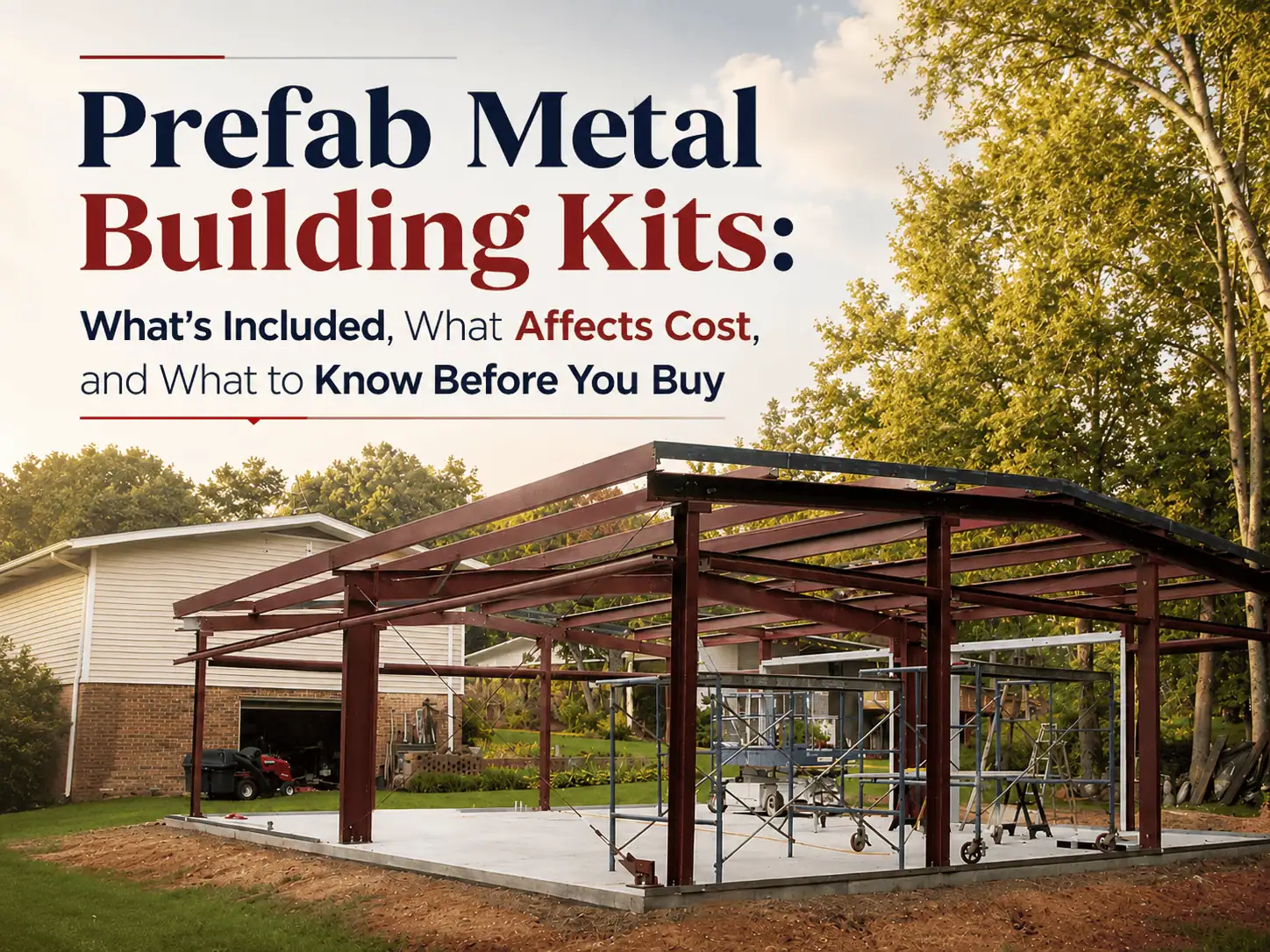
Prefab Metal Building Kits: What’s Included, What Affects Cost, and What to Know Before You Buy
If you have started researching prefab metal building kits, you have probably noticed that prices, sizes, and descriptions can vary a lot from one building supplier to another. That is because a prefab metal building kit is not a boxed product with one fixed price. It is an engineered building package planned around your use, your site, your local building requirements, and the options you choose.
Before you request a quote, it helps to understand what a kit includes, what it usually does not include, and which decisions shape your final cost. This guide breaks it down in plain language so you can plan your steel building with fewer surprises.
Starting your first steel building project? Review Safeway Steel’s First Time Steel Building guide before you finalize your size, layout, or budget.
What Is a Prefab Metal Building Kit?
A prefab metal building kit, also called a prefabricated steel building kit or steel building kit, is a factory-engineered package of structural components delivered to your site for assembly. The parts are manufactured ahead of time, cut to match the approved design, and shipped as a coordinated building system.
That makes it different from traditional wood-frame construction, where a large amount of measuring, cutting, and fitting happens on-site. With a prefab steel kit, the major engineering and fabrication work happens before delivery. The frame, roof and wall panels, connection hardware, drawings, and selected openings are designed to work together.
This helps reduce material waste, speed up assembly, and give you a building that is planned around specific snow, wind, size, and usage requirements.
Want to understand the full building process? See How To Get Started for a simple walkthrough of the planning, deposit, delivery, and erection steps.
What Comes in a Prefab Metal Building Kit?
This is one of the most important questions to ask before comparing quotes. A lower price does not always mean a better deal if the package is missing key parts or support. Based on Safeway Steel’s DIY Metal Building Kits information, a typical kit package can include the following items, depending on the building you approve.
Primary and Secondary Framing
The frame is the skeleton of the building. Primary framing includes major structural pieces such as columns and rafters. Secondary framing includes purlins, girts, and eave struts that tie the frame together and support the roof and wall panels.
Frame choice matters. A clear span frame gives you open interior space without interior columns, while multi-span, single slope, and lean-to designs may fit different project needs and budgets.
Roof and Wall Panel Components
Steel panels cover the roof and sidewalls of the building. Depending on your design, Safeway Steel offers panel options such as PBR panels, SAFE-Lok panels, SAFE-Dek panels, and ShadowRib panels.
Your panel choice affects appearance, weather performance, maintenance expectations, and price. It should be selected around the building’s use, climate, roof system, and long-term needs.
Door and Window Components
Your kit includes the components needed for the doors, windows, and openings selected during the design process. That may include framing, jambs, trims, and related hardware for the approved layout.
This is why door placement matters early. A walk door, overhead door, framed opening, or window is not just a visual choice. It affects the building frame, panel layout, access, and cost.
Fasteners, Bolts, and Connection Hardware
A steel building kit includes the hardware needed to connect the building system together. These details are easy to overlook, but they are part of what makes a prefab steel package more controlled than buying loose materials and trying to make them work in the field.
Erection Drawings and Installation Guidance
Your kit also includes building-specific drawings that guide assembly. These drawings are important for the crew, the foundation planning, and the overall project sequence.
The key word is selected. Your kit reflects the size, layout, openings, roof style, colors, panels, and accessories approved during the design process. What you design and approve is what the manufacturer prepares.
Need to compare parts before ordering? Explore Steel Building Components, Steel Building Accessories, and Steel Building Colors while planning your kit.
What Is Usually Not Included in a Metal Building Kit?
Knowing what is not included is just as important as knowing what comes in the kit. Most metal building kits are structural shell packages. Unless the item is specifically quoted, you should not assume it is included.
Foundation and Concrete Slab
Your building needs a properly prepared foundation. Concrete slab work, anchor bolt placement, site grading, and related foundation labor are usually handled separately by a local concrete contractor or your own crew.
Do not wait until the building is ready to ship before thinking about the slab. Your foundation schedule can affect delivery, erection, and final project cost.
Site Preparation
Clearing, grading, leveling, drainage planning, and access to the site should be handled before the kit arrives. A steel building package cannot solve a poor building pad, soft ground, bad drainage, or a site that delivery trucks cannot reach.
Building Permits
Most permanent steel buildings require permits. Local building departments set the requirements, and those requirements can vary by county, city, state, building use, and site conditions.
Safeway Steel can provide building drawings to support the process, but the buyer should always confirm permitting requirements locally before finalizing the project.
Interior Finish-Out
A prefab steel building kit gives you the structural shell. Interior walls, electrical work, plumbing, HVAC, office build-outs, restrooms, and finished interiors are separate parts of the total project.
Insulation and Condensation Control
Insulation may be available as an add-on, but it should not be assumed in a base kit. If your building will be used as a workshop, storage space, equipment building, commercial facility, or temperature-sensitive space, bring up insulation early.
Condensation control is also worth discussing, especially in humid regions or buildings where temperature swings are common. Safeway has a related guide on Dr!pStop Condensation Control Insulation that can help buyers understand why moisture control matters.
Planning a usable workshop or storage space? Read Safeway’s guide on setting up a metal building yourself before choosing DIY assembly.
What Affects Metal Building Kit Prices?
Metal building kit prices can vary widely because every building is shaped by different project conditions. If two quotes look very different, there is usually a reason. The most common cost factors are below.
Building Size
Width, length, and height have a major effect on price. Wider and taller buildings need more steel, more panels, more engineering, and often heavier framing.
Clear span buildings with no interior columns often require stronger framing than multi-span buildings of the same footprint. That open interior space is valuable, but it can increase the structural cost.
Frame Type and Roof Style
Frame style affects both function and price. Clear span, multi-span, single slope, and lean-to designs all serve different purposes. Roof style also matters because weather handling, roof pitch, panel direction, and drainage can change the material package.
If you are unsure which frame fits your use, start with Safeway Steel’s Steel Building Frame Options page.
Snow and Wind Load Requirements
Snow and wind loads are not optional upgrades. They are structural requirements based on location, building code, exposure, and use. A building in a high-snow region or high-wind zone may need heavier steel, stronger bracing, and a different engineering package.
This is one of the biggest reasons you should not shop by base price alone. The right building for one zip code may not be right for another.
Panel Type and Gauge
Panel type, gauge, roof profile, wall profile, and finish can all affect cost and long-term performance. Standard panels may work well for many projects, while premium systems may be better for certain commercial, weather-sensitive, or long-term applications.
Doors, Windows, and Framed Openings
Openings change the building package. A small walk door is very different from a large commercial overhead door, hangar-style opening, or multiple windows along a sidewall.
Think about access before you order. It is easier to plan door size and placement now than to change it later.
Accessories and Upgrades
Ventilation, gutters, downspouts, skylights, louvers, trim packages, canopies, roof curbs, and insulation systems can add value to the building, but they also affect the quote. Safeway’s Steel Building Accessories page gives a good overview of available add-ons.
Delivery Location
Your delivery location matters because freight and logistics are part of the project. The farther the building package needs to travel, the more delivery can affect the final number.
Installation Method
Self-erection and professional erection are different cost paths. DIY may lower labor cost, but only if the building fits your skill level, crew, tools, and schedule. Larger or more complex projects are usually better handled by experienced crews.
Comparing steel to wood? Read Are Steel Buildings Cheaper Than Wood? for another angle on long-term project value.
DIY Kit vs. Professional Installation: Which Is Right for You?
One of the biggest decisions you will make is whether to assemble the building yourself or hire a professional crew. Both options can work, but they fit different buyers.
When DIY Assembly Makes Sense
DIY assembly is usually a better fit for smaller and simpler buildings, especially when the buyer has construction experience, a capable crew, the right tools, and enough time to follow the drawings carefully.
Safeway Steel’s Sierra Series kits are designed for easier self-assembly. These kits are available in sizes from 20×24×10 up to 30×52×12, and Safeway notes that they are not available where ground snow load is above 30 pounds. Confirm current availability for your location before choosing this route.
When Professional Installation Is the Better Choice
Larger buildings, commercial structures, wide-span buildings, aviation buildings, high-snow buildings, and high-wind projects usually call for professional erection. The structure is more demanding, the drawings are more involved, and mistakes can be expensive.
If you are building for business use, public use, equipment storage, aviation, manufacturing, or any time-sensitive need, professional erection may save time and reduce risk.
What About Turnkey Support?
Safeway Steel’s buying process notes that if you choose Turnkey Solutions, the building can be delivered and erection can begin as part of the project sequence. This can help buyers who do not want to coordinate every construction detail alone.
There is no single right answer. The right installation path depends on the building size, your site, your schedule, and your comfort level with steel building assembly.
Need open space inside the building? Review Clear Span Metal Buildings to understand when a column-free layout makes sense.
How Safeway Steel Helps You Plan Your Kit
Buying a prefab metal building kit from Safeway Steel is not just a click-and-ship transaction. It is a planning process that starts with your building use, budget, site, options, and location.
When you contact Safeway Steel, a building designer can talk through your ideas, look, and budget to help determine the right building for your project. After the design is finalized, the building can move into production, and delivery and erection planning follow.
This matters because small design decisions can affect the whole project. A door opening may affect framing. Roof choice may affect snow shedding. Building width may affect the frame. Insulation may affect interior comfort. A good planning process keeps those pieces connected.
If you are still early in the process, Safeway Steel’s Services page is a good place to review support for building construction, custom design, DIY buildings, and mini storage buildings.
Ready to move from research to numbers? Visit The Buying Process or call 1-800-818-2245 to speak with Safeway Steel about your building.
Common Mistakes Buyers Make Before Ordering a Kit
Most steel building problems start before the building arrives. They usually come from unclear planning, rushed decisions, or comparing quotes without knowing what is included.
Not Confirming Local Load Requirements
Your building must be planned around local snow and wind requirements. If that information is missed early, the building may need changes before it can move forward.
Underestimating the Foundation Scope
Many buyers focus only on the kit price. The slab, grading, site prep, drainage, and access can all affect the real project budget. Get foundation input early.
Waiting Too Long on Permits
Do not order first and ask permit questions later. Talk to your local building department before finalizing the design, especially if the structure is large, commercial, agricultural, or intended for public use.
Ordering Too Small
This is one of the most common regrets. A building that feels big on paper can fill up fast once vehicles, equipment, benches, shelves, doors, and walking room are included.
Forgetting Future Access Needs
Think about how the building may be used five years from now. A larger overhead door, better side access, or more wall height may be easier to include now than to add later.
Choosing DIY Without an Honest Skill Check
DIY can work well for the right buyer and the right building. It can also become frustrating if the project is larger than expected. Be honest about tools, crew, equipment, schedule, and experience.
Worried about long-term durability? Safeway’s guides on whether steel buildings rust and metal building life expectancy can help you plan for maintenance.
Best Uses for Prefab Metal Building Kits
Prefab metal building kits are flexible because they can be designed around many uses. The best layout depends on what you need to protect, store, repair, operate, or expand.
Garages and Workshops
Garages and workshops are some of the most common uses for prefab metal building kits. Whether you need a two-car garage, a personal shop, a mechanic bay, or a combined parking and work area, steel gives you durable shelter and open usable space.
Explore Safeway’s Garages & Workshops options if your project is residential, hobby-based, or small-business focused.
Farm and Agricultural Storage
Steel buildings work well for farms and ranches because they can protect tractors, implements, hay, feed, tools, livestock-related supplies, and seasonal equipment. Wide openings and clear spans are useful when large machinery needs room to move.
See Steel Farm & Agricultural Buildings for farm-focused use cases.
RV, Boat, and Equipment Storage
Large personal storage buildings need height, width, and door clearance. A steel kit can be planned around RVs, boats, trailers, tractors, and other oversized assets that do not fit inside a standard garage.
Commercial Warehouses and Industrial Space
Commercial and industrial buyers often choose steel buildings for warehouses, retail storage, manufacturing space, equipment storage, and shop operations. A steel structure can be planned with high sidewalls, wide doors, loading access, office areas, and open interiors.
Review Commercial & Industrial Metal Buildings if your project supports business operations.
Mini Storage Buildings
Mini storage is a strong use case for prefab steel because the layout can be planned in repeatable bays. Operators can think through traffic flow, unit mix, phased expansion, and long-term property use.
Explore Mini Storage Buildings if you are planning a storage business or property expansion.
Custom and Specialty Buildings
Prefab steel buildings are also used for aviation, churches, municipal buildings, recreation, fire and rescue facilities, and manufacturing. If your use does not fit a basic garage or workshop, a Custom Steel Building may be the better starting point.
Still comparing building uses? Read 20 Metal Building Ideas for Your Project for more ways buyers use prefab steel buildings.
FAQs About Prefab Metal Building Kits
What is the difference between a prefab metal building kit and a custom steel building?
A prefab metal building kit is a pre-engineered package manufactured for assembly on your site. A custom steel building follows a similar manufacturing process, but the design is shaped around your chosen size, frame, roof, doors, panels, colors, and use. In practical terms, many prefab steel kits are still custom planned.
Do I need a concrete slab before my kit is delivered?
In most cases, yes. Your foundation should be prepared before the building arrives. The slab and anchor bolt layout should match the engineered drawings. Always coordinate slab timing with your building consultant and concrete contractor.
Can I install a prefab metal building kit myself?
Some smaller, simpler kits can be assembled by capable DIY buyers with the right tools, crew, and time. Larger buildings, high-load buildings, commercial buildings, and complex designs are usually better handled by professional crews.
Do prefab metal building kits come with engineering drawings?
Yes, a steel building kit should include drawings specific to the building package. These drawings help guide assembly and can support the permit process, depending on local requirements.
What roof style options are available?
Roof options can vary by building type and design. Safeway Steel discusses roof styles for DIY metal buildings, including vertical roofs, A-frame horizontal roofs, and regular roof designs. Confirm which roof styles are available for your exact building and location.
How do I know what snow and wind load my building needs?
Snow and wind requirements are based on location, exposure, use, and local building code. Your building consultant can help identify what information is needed, but you should also confirm local requirements with your building department.
Can I add insulation to my kit?
Insulation may be available as an add-on. If you plan to use the building as a shop, storage space, conditioned workspace, grow space, or commercial facility, discuss insulation and condensation control during design.
What financing options are available?
Safeway Steel has a Financing page with current financing information. Terms and availability can vary, so ask Safeway Steel for current details before making decisions.
How do I get started with Safeway Steel’s buying process?
Start by contacting Safeway Steel or requesting a quote online. A building designer can discuss your ideas, budget, and building goals. You can also review The Buying Process before you call.
Need the basics first? Read What Are Steel Buildings? if you want a simpler starting point before comparing kits.
Ready to Plan Your Prefab Metal Building Kit?
A prefab metal building kit can be a smart way to build durable, flexible space for a garage, workshop, agricultural building, warehouse, storage facility, or specialty structure. The key is planning the building correctly before it goes into production.
Safeway Steel’s building consultants can help you work through frame type, roof style, doors, panels, colors, insulation, snow and wind requirements, and installation options. Specifications, pricing, and availability can vary by building type and location, so contact Safeway Steel for current details.
Ready to price your steel building kit? Call 1-800-818-2245 or request a free quote from Safeway Steel today.