Get A Quote Today!
14
Aug 2026
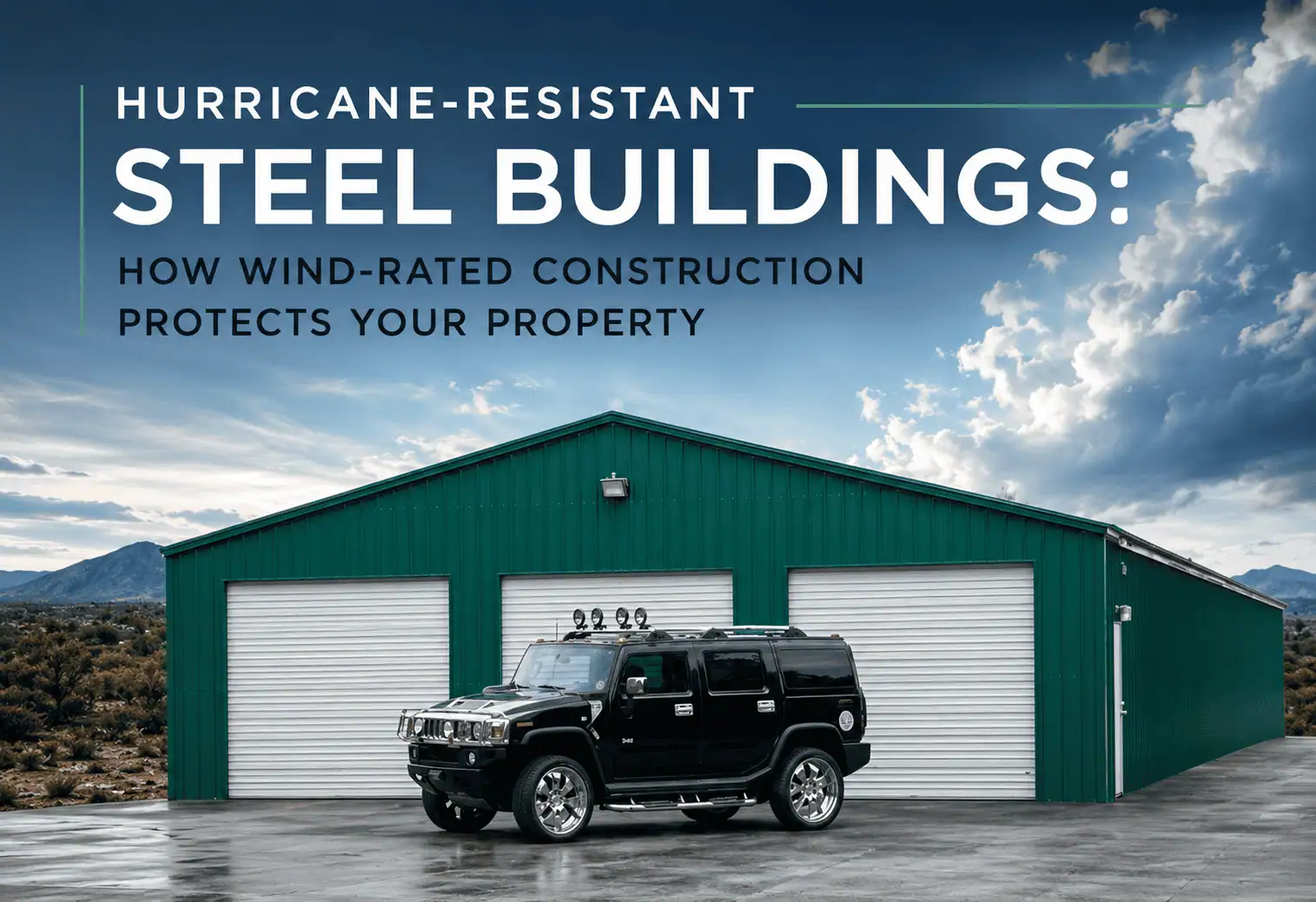
Hurricane-Resistant Steel Buildings: How Wind-Rated Construction Protects Your Property
Every June, coastal business owners start watching the tropics. By August, with the Atlantic hurricane season heading into its peak, hurricane-resistant steel buildings stop being a nice-to-have and start being the difference between a structure that survives a storm and one that doesn’t.
If you’re storing vehicles, inventory, equipment, or livestock in a building that was never engineered for wind, this is the season you find out the hard way.
A properly built steel building handles high wind through rigid framing, a wind load rating engineered for your exact site, and anchoring that’s built for the job. This guide covers what actually makes a steel building hurricane-resistant, what wind load numbers mean, and how to get your property ready before the next storm forms.
Key Highlights
- Steel framing resists hurricane-force wind better than wood because it naturally flexes and doesn’t rely on nailed joints that work loose under repeated pressure.
- Wind load ratings are engineered per location, based on wind speed data, exposure category, and local building codes, not a flat number that applies everywhere.
- Anchor bolts and foundation connections matter as much as the frame. A strong frame on a weak anchor system can still fail.
- Roof pitch, panel gauge, and bracing placement all affect how a building performs under wind uplift and lateral pressure.
- Garages, farm buildings, commercial structures, aviation hangars, and government buildings all need site-specific engineering, not identical specs.
- Hurricane season inspections should happen every year, not just after a storm warning is issued.
- Safeway Steel designs every building to meet local and state wind and snow load certifications and backs each structure with a 40-year warranty.
What Makes a Steel Building Hurricane-Resistant?
Hurricane resistance in a steel building comes down to three things working together: the frame, the wind load rating, and the connection to the ground. Miss one and the other two don’t matter much. A well-engineered frame anchored poorly will still fail. A perfectly anchored building with an undersized frame will still buckle. Buildings that hold up through hurricane season are engineered as a complete system.
Rigid Steel Framing and Load Path
Steel framing resists hurricane winds because it moves load through a continuous, flexible path instead of relying on friction and nails. Safeway Steel buildings use hot-dip galvanized primary and secondary framing members, bolted together with a patented connection system built for rigidity against wind and snow loads.
Wind hits the roof and walls, travels through the rafters and columns, and transfers down into the foundation. If any link in that path is weak, wind pressure concentrates there instead of spreading out evenly across the structure. That’s why frame connections matter as much as the steel gauge itself.
Wind Load Ratings and Local Building Codes
A wind load rating tells you how much pressure a building is engineered to handle. Wind speed requirements vary by state, county, and even by how exposed your site is to open terrain. For example, a building on a flat, treeless lot in a coastal county needs a higher wind rating than the same structure tucked behind trees a mile inland.
Safeway Steel designs buildings to meet local and state wind and snow load certifications for the specific address they’re going to, so the rating on paper actually matches the conditions your building will face. If a dealer quotes the same wind rating for every state, that’s worth a second look before you sign anything.
Anchoring and Foundation Connections
Anchor bolts are what keep a well-rated frame from becoming a very expensive kite. They connect the steel frame to the foundation, and their placement has to match the engineered drawings exactly.
A frame with a high wind rating and undersized or misplaced anchors can still lift or shift during sustained wind and gusts. This is one of the most common places DIY installs go wrong, since anchor spacing and embedment depth aren’t something to guess in the field. If you’re planning a self-installed kit for a hurricane-prone site, ask for the anchor bolt schedule before you pour the foundation, not after.
Planning a DIY installation? Read Setting Up a Metal Building Yourself? Ensure the Job is Done Right! before foundation and assembly work begins.
Wind Load vs. Snow Load: What’s the Difference?
Wind load and snow load are both structural ratings, but they measure different forces and matter in different regions. A building engineered for heavy snow in the Northeast won’t automatically handle 130 mph coastal gusts, and a building rated for hurricane-force wind near the Gulf isn’t automatically built for a heavy snow load in the mountains. Some regions, like parts of the Mid-Atlantic and Northeast coast, need buildings engineered for both. Here’s how the two compare.
| Factor | Wind Load | Snow Load |
|---|---|---|
| What it measures | Pressure from sustained wind and gusts pushing, pulling, or lifting the structure | Weight of accumulated snow and ice pressing down on the roof |
| Primary risk if under-rated | Wall failure, roof uplift, panel separation | Roof collapse, purlin overload |
| Most affected regions | Coastal states, open plains, hurricane corridors | Northern and mountain states, higher elevations |
| Key design factors | Exposure category, wind speed data, building shape | Ground snow load, roof pitch, drift accumulation |
| How it’s engineered at Safeway Steel | Certified bracing, hot-dip galvanized frame, matched anchor bolt system | Reinforced framing and roof pitch options certified to local snow codes |
| Where both matter at once | Coastal Mid-Atlantic, parts of the Northeast, and mountainous coastal regions require combined load calculations |
If your property sits in a region where both wind and snow load apply, give your design consultant both numbers up front. Combined load calculations affect frame size, bracing, and sometimes foundation depth, so it’s not something to add in after the drawings are already done.
Which Building Types Need the Most Wind Protection?
Not every steel building faces the same wind exposure, but a few uses carry more risk if the wind rating is wrong.
Farm and agricultural buildings. Barns and equipment buildings often sit on open, exposed land with little windbreak, which increases exposure category and wind pressure. Safeway Steel’s farm and agricultural buildings are engineered to meet local snow and wind load certifications so livestock and equipment stay protected through storm season.
Commercial and industrial buildings. Warehouses, retail buildings, and manufacturing space represent a larger financial investment, so a wind failure costs a lot more than a garage roof. Safeway Steel’s commercial and industrial metal buildings are engineered around your site’s wind and snow requirements from the start, not added on after the fact.
Aviation buildings and hangars. A hangar door is one of the largest openings in any structure, and large openings change how wind pressure moves through a building during a storm. Safeway Steel’s aviation buildings account for door size and placement in the engineered wind design instead of treating it as an afterthought.
Government and municipal buildings. Fire stations, public works buildings, and other municipal structures often need to stay operational immediately after a storm, which raises the bar on wind design. Safeway Steel supplies government buildings designed to meet the codes required for continued use after severe weather.
Garages and workshops. Homeowners protecting vehicles, tools, and recreational equipment still need a wind-rated building, especially in coastal counties where a two-car garage faces the same wind exposure as a commercial structure next door. See Safeway Steel’s garages and workshops options.
Compare building options for your site:Farm & Agricultural Buildings, Commercial & Industrial Metal Buildings, Aviation Buildings, Government Buildings, or Custom Steel Buildings.
Design Choices That Improve Wind Performance
A few design decisions affect how a steel building performs once the wind picks up, beyond the base wind rating.
- Roof pitch. Higher-pitch roofs shed wind differently than low-slope designs, and pitch choice interacts directly with your local wind exposure category. Compare options on Safeway Steel’s frame options page.
- Frame type. Clear span frames free up floor space, but they carry load differently than multi-span frames. That matters when you’re comparing wind performance across building widths.
- Panel gauge and fasteners. Thicker panel gauge and properly spaced fasteners resist wind uplift better than thin panels stretched across wide spacing. Review panel and fastener options under steel building components.
- Bracing. Bracing stabilizes the structure against lateral movement and racking. Placement should be part of the engineered design from day one, not something added after the frame goes up.
- Coating quality. Building color doesn’t affect wind performance, but coating quality affects how well panels hold up against wind-driven rain and salt air in coastal areas. See building color options.
Getting Your Building Ready Before Hurricane Season
Hurricane preparation for a steel building starts months before the first storm watch, not the day before landfall.
- Inspect anchor bolts and foundation connections every year, not just after a named storm passes through.
- Check that roll-up and walk doors close and latch fully. An unsecured door lets wind pressure build up inside the building, which is how roofs get pushed off from the inside out.
- Clear gutters and drainage paths so rainfall doesn’t pool against the foundation during heavy rain events.
- Look for loose or rusted fasteners on panels and trim. A single missing fastener can start a panel peeling once sustained wind gets under it.
- Photograph your building’s condition before storm season for insurance documentation.
- Review your building’s wind rating against current code if you bought it more than 10 years ago. Wind speed maps and local codes do get updated.
Common Mistakes When Buying a Steel Building for a Hurricane Zone
Buyers in hurricane-prone areas often make a handful of mistakes over and over, and most of them show up after the first real storm, not before.
Buying on price alone. The cheapest quote is usually cheapest because it’s engineered for a lower wind rating, not because the dealer found a better deal on steel.
Skipping engineered drawings on a DIY kit. Anchor spacing and connection details on the drawings exist for a reason. Skipping them to save time costs more later.
Guessing at exposure category. Exposure category should be confirmed for your exact site, not assumed based on your general region.
Assuming one wind rating covers a whole state. Wind requirements can change by county and by proximity to the coast, sometimes within the same 50 miles.
Not asking about anchor bolt specifications before pouring the foundation. Once concrete is set, correcting anchor placement is far more expensive than getting it right the first time.
Planning a wind-rated steel building?Request pricing for your site or call (800) 818-2245 to talk with a Safeway Steel design consultant.
Frequently Asked Questions
Are steel buildings hurricane-resistant?
Steel buildings can be highly resistant to hurricane winds when they’re engineered for your specific wind load requirements, properly anchored, and built with rigid, connected framing.
What wind speed can a steel building withstand?
Wind speed capacity depends on the building’s engineered design, not a fixed number that applies to every structure. Local codes set minimum wind speed requirements based on your county and exposure category, and your building is designed to meet or exceed that number.
What’s the difference between wind load and snow load?
Wind load measures pressure from sustained wind and gusts, while snow load measures the weight of accumulated snow and ice on the roof.
Do steel buildings need to be anchored differently in coastal areas?
Yes. Coastal and open-exposure sites generally require a higher wind rating and a matching anchor bolt schedule than sheltered inland sites.
How often should I inspect my steel building before hurricane season?
Plan on inspecting your steel building at least once a year, ideally before hurricane season ramps up in June.
Can an existing metal building be upgraded for better wind resistance?
Some improvements, like reinforcing anchor connections, sealing door openings, and replacing worn fasteners, can improve how an existing building performs in wind. A full wind rating upgrade usually requires reviewing the original engineered drawings, since the frame and bracing were sized for a specific wind load from the start.
Talk to Safeway Steel Before the Next Storm Forms
Hurricane season doesn’t wait for anyone to catch up on maintenance or discover their building was never rated for their zip code. The buildings that hold up are the ones engineered for their exact wind and snow requirements from day one, anchored correctly, and inspected before storm season instead of during it.
If you’re planning a new steel building for a hurricane-prone property, or want to know how your current structure measures up, talk to a Safeway Steel design consultant. Backed by a 40-year warranty, an A+ BBB rating, and over 20 years of experience building factory-direct steel structures nationwide, Safeway Steel can walk you through the wind and snow load numbers specific to your address.
Call (800) 818-2245 or visit our get started page to request a free quote.